Freight Visibility When the Driver Doesn’t Pick Up the Call
I've watched phone-based tracking fail at scale in Indian logistics. Here's what driver shortage data shows, and how I replace “bhai, kahan ho?” / find my truck calls with freight visibility.
By Niraj · Updated 2026-09-20
I've sat through the most expensive sentence in Indian logistics too many times: a missed call. A coordinator dials the driver. The driver is climbing a ghat, waiting at a check post, sleeping after a night run, or simply out of network. The customer is already asking for an ETA. Nobody has a shared picture of the load.
- 2.2 million — skilled-driver shortage cited in 2025 public remarks (Nitin Gadkari / industry briefings)
- ~55 / 100 — drivers available per 100 trucks (reported 2024 ratio) (Industry fleet surveys)
- 66% — freight still on road, where driver calls remain the default (NITI Aayog)
Why drivers go silent, and why that's normal
Drivers aren't office staff. They manage fatigue, fuel, RTO checks, and patchy highway coverage. Expecting a live answer every two hours is unfair to them and unreliable for me. Union and industry commentary in 2024-25 also pointed to a structural shortage: fewer drivers per truck than fleets need, especially for long-haul.
When supply of drivers is tight, the remaining crew is stretched. Stretched crews miss calls. Missed calls become fake ETAs. Fake ETAs become dock chaos.
The hidden cost of calling for location
Each location call consumes three calendars: yours, the driver’s, and often the transporter’s. Multiply that by every active truck and I have a full-time job that produces no audit trail. Two people can hear two different stories about the same load.
If the team still lives in call logs, I don't have tracking, I have a phone tree.
What “visibility” should replace in a typical control tower
Source: Lorryman operating model (illustrative mix of daily coordinator time)
- Driver calls / WhatsApp: 45 % of coordinator time
- Customer ETA replies: 25 % of coordinator time
- Exception handling: 20 % of coordinator time
- Planning / docks: 10 % of coordinator time
What real freight visibility looks like
Freight visibility means I can see whether the truck is moving, roughly where the load sits on the corridor, and whether the trip is stalling, without waiting for a reply. I still call for breakdowns and delivery instructions. I stop calling for “kahan ho?”
How Lorryman helps when the driver doesn’t answer
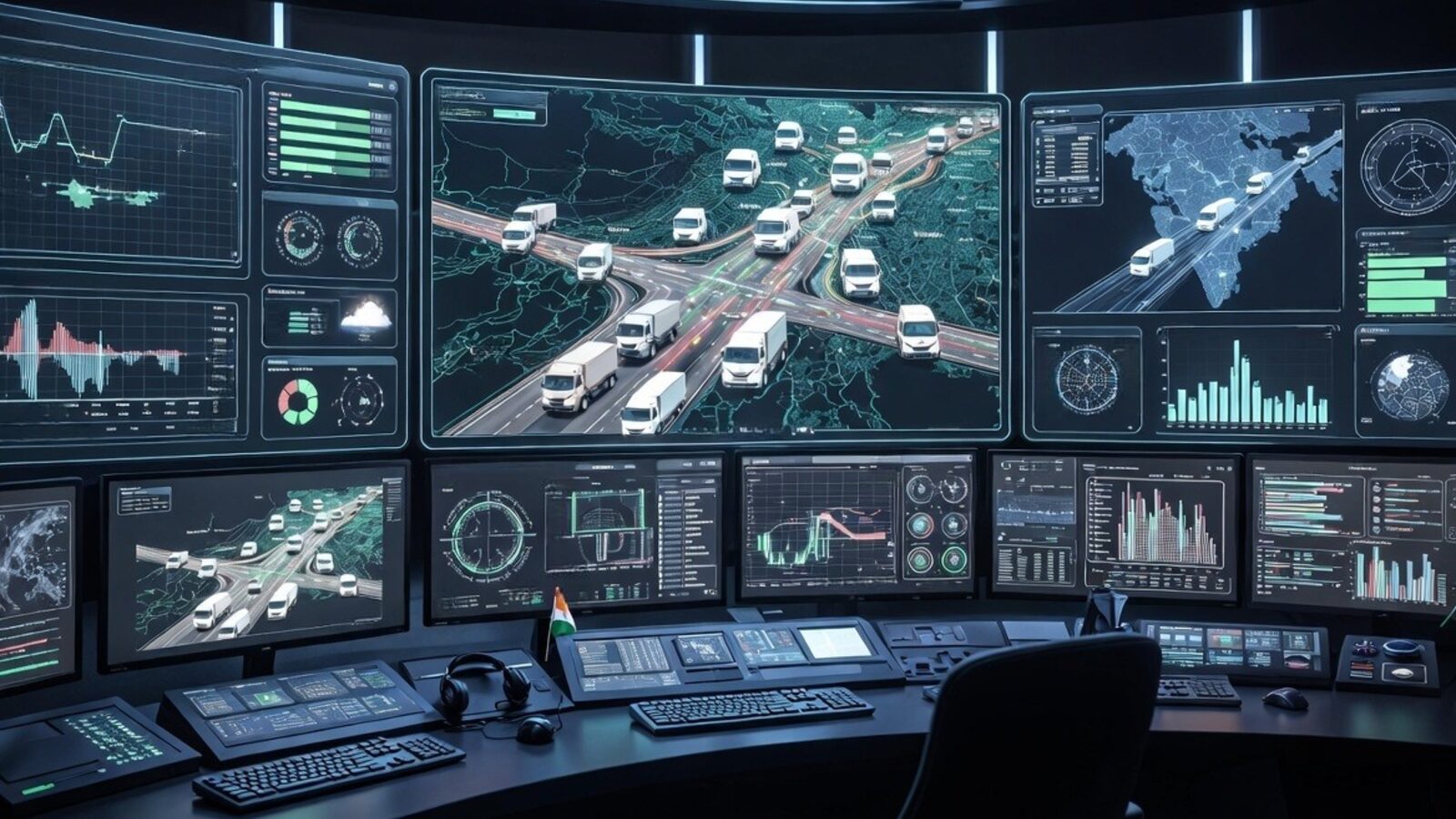
Lorryman tracks the truck tied to the load so visibility doesn't depend on someone picking up. That's exactly when most businesses need tracking the most, nights, ghats, and the last 40 kilometres before a warehouse booking.
Design for silence, not for perfect phone coverage
I've lived this on the road. Highway India is a map of dead zones, night halt yards, ghat climbs, and check-post queues. A professional driver managing fatigue won't treat the fourth location call as a KPI. If the process assumes an answer, the process will fail on the exact nights I need it most. Freight visibility is the decision to treat silence as normal and still keep a picture of the load. That's an ops choice, not a lecture to drivers.
Coordinator culture grew up around the phone because there was no other shared object. WhatsApp groups multiplied the same problem: more messages, same uncertainty. Two people can screenshot two different live locations five minutes apart and still not know if the truck is the one that loaded the cargo. A trip-level view reduces argument. It doesn't replace human judgement on a breakdown. It stops judgement from being invented from a missed call.
What a control tower should actually watch
I watch assignment: is the RC on the trip the RC that loaded? I watch movement: is the vehicle progressing on the expected corridor or sitting? I watch exceptions: long dwell, unexpected direction, no movement through a window that should have been a driving window. I don't watch the driver’s tone of voice. Tone isn't data. When those three watches exist, customer ETA replies become a copy-paste from a system instead of a negotiation with a tired human at 11 p.m.
The 45% of coordinator time spent on driver calls isn't a moral failing. It's what I get when location is a conversation. I move location into a system and that time returns to docks, claims, and customer recovery, work that actually needs a person. Teams that make the switch describe the first month as uncomfortable, then obvious. The discomfort is losing the illusion of control that a phone tree provides.
Shortage makes the old habit unsafe
Public remarks on a multi-million driver shortfall aren't a reason to shout louder at the remaining crew. They're a reason to stop using those people as GPS transponders. A stretched driver who must answer location calls while climbing a ghat is a safety problem dressed up as customer service. I respect looks like fewer interruptions and clearer instructions when I do call: gate code, labour timing, unloading bay, not “bhai, pin drop.”
If the SLA to a buyer is a live ETA, buy visibility. If the SLA is a polite apology after a missed call, keep the phone tree. Most businesses think they sold the first and operate the second. The gap shows up as dock chaos, overtime, and a reputation for being “always late even when the truck was close.” Closeness without a shared picture is still blindness.
A week of running without location calls
Monday: freeze a list of active trips and turn tracking on before dispatch. Tuesday: coordinators may look at the board before dialling. Wednesday: require a reason code if someone still calls for location (habit is sticky; make it visible). Thursday: share one customer update generated from the board, not from a driver quote. Friday: compare exceptions caught by the board versus exceptions caught only because someone happened to call. That comparison is the business case for month two.
I find Lorryman useful here because the failure mode it solves is exactly driver unavailability. The product assumption is that the person with the steering wheel is busy doing the job I hired the truck for. Visibility should survive that. If it doesn't, I don't have visibility. I have a nicer address book.
Dead zones are a map, not a character flaw
I've lived this on the road. Highway India is a patchwork of ghats, night-halt yards, check-post approaches, and stretches where a phone simply dies. A professional driver managing fatigue won't treat the fourth location call as a KPI. If the process assumes an answer, the process will fail on the nights I need it most, monsoon, fog, a jammed border, a climb where both hands belong on the wheel. Freight visibility is the decision to treat silence as normal and still keep a picture of the load. That's ops, not a lecture. Coordinators who grew up on the phone hear silence as insubordination. It's usually physics, sleep, or a queue. I design for those. I keep human calls for gate codes, labour timing, and breakdowns. I stop using the remaining drivers in a shortage as transponders. They're already doing the job I hired the truck for.
WhatsApp groups multiplied the same failure. Two people can screenshot two different live locations five minutes apart and still not know whether the pin belongs to the vehicle that loaded the cargo. A trip-level view reduces that argument. It doesn't replace judgement on a breakdown. It stops judgement from being invented from a missed ring. Shift handovers make it worse: the day desk leaves a note that “driver will call,” the night desk inherits a rumour, the plant gets an 11 p.m. promise that nobody can audit on Monday. I put assignment, movement, and exceptions on an object that survives a handover. Then the night desk isn't a phone tree. It's a watch. That's what a control tower is for. A tower that lives in call logs is just an expensive room with better chairs. If the Saturday reliever can't see the same trip the Friday coordinator saw, I don't have visibility. I have a personality-dependent inbox.
Staff the three watches, not the driver’s mood
I watch assignment: is the RC on the trip the RC that loaded? I watch movement: is the vehicle progressing on the expected corridor or sitting? I watch exceptions: long dwell, unexpected direction, no movement through a window that should have been a driving window. I don't watch tone of voice. Tone isn't data. When those three watches exist, customer ETA replies become a copy from a system instead of a negotiation with a tired human. The share of coordinator time that currently burns on driver calls is what I get when location is a conversation. I move location into a system and that time returns to docks, claims, and customer recovery, work that actually needs a person. The first month feels uncomfortable because the phone tree gave an illusion of control. The illusion was the product. Silence plus a board is the grown-up version.
I build reason codes for the calls that still happen. If someone dials for location, they must tag why: board unclear, customer screaming, habit, plant demand, suspected RC swap. Habit will dominate week one. I make it visible. By week two, habit should embarrass the desk. If a senior still wants a “quick confirmation” on every load, show the tagged log. Data changes culture faster than slogans. I give coordinators exception work so they don't look idle: dwell over a threshold, mismatch between indent RC and gate RC, a buyer who needs a recovery plan, a dock sequence that must change because two trucks will hit together. People need a job to replace the job I'm deleting. Otherwise they will recreate the phone tree to feel useful, and I'll be back to missed calls as the operating system. The codes aren't HR theatre. They're how I see whether the board is trusted or ignored.
Shortage makes the old habit unsafe as well as slow
Public remarks on a multi-million skilled-driver shortfall aren't a reason to shout louder at the remaining crew. They're a reason to stop using those people as always-on location devices. A stretched driver answering “bhai, pin drop” while climbing a ghat is a safety problem dressed as customer service. I respect looks like fewer interruptions and clearer instructions when I do call. If the brand talks safety in decks and then mandates hourly pins, the deck is fiction. Industry commentary in recent years also pointed to fewer drivers per truck than fleets want, especially on long-haul. Stretched crews miss calls. Missed calls become fake ETAs. Fake ETAs become dock chaos. The chain is operational, not moral. Cut it at the location-call step. I leave the human on the road. Every unnecessary ring is attention stolen from fuel, fatigue, and the next check-post. I don't get to claim driver welfare and also run an IVR on their pocket.
If the SLA to a buyer is a live ETA, buy visibility. If the SLA is a polite apology after a missed call, keep the phone tree. Most businesses think they sold the first and operate the second. The gap shows up as overtime, a reputation for being late even when the truck was close, and a plant that no longer believes logistics. Closeness without a shared picture is still blindness. A truck forty kilometres out that nobody can prove isn't a planning input. It's a rumour with diesel in it. I find Lorryman useful here because the failure mode it solves is exactly driver unavailability. The product assumption is that the person with the steering wheel is busy. Visibility should survive that. If it doesn't, I don't have visibility. I have a nicer address book and the same 11 p.m. panic.
A week without location calls, then a month of keeping it boring
Monday: freeze active trips and turn tracking on before dispatch, not after the first missed ring. Tuesday: the board is consulted before anyone dials. Wednesday: reason codes on leftover location calls. Thursday: one customer update generated from the board, not from a driver quote. Friday: compare exceptions the board caught versus exceptions caught only because someone happened to call. That comparison is the business case for month two. If the board caught nothing and the phone caught everything, I have an adoption problem, people aren't looking. If the board caught stalls the phone missed, I have a control tower. I don't skip Friday. Teams that skip measurement return to the phone on the first stressful night, and then they say tracking doesn't work in India. India wasn't the problem. Nerve was. I keep the Friday note. It's the only artefact finance will trust when I ask for month-two spend.
After the week, keep the tower boring. Fewer overlapping WhatsApp groups. One trip object. A rule that nobody asks a driver where they're if the board already says. A weekly twenty-minute review of false ETAs. Indian freight will always have chaos outside the gate, check-posts, weather, a market truck that swapped. Inside the room I can choose not to add more chaos. The night desk should inherit a board, not a rumour. The plant should staff from stalls and ETAs that can be replayed on Monday, not from optimism. When a new coordinator joins, they should answer “where is load X?” without calling anyone. That's the test that the week actually changed the company. Until that test passes, I'm still running Indian road freight on missed calls, and the driver who didn't pick up is still the system of record.
Handovers, plants, and the customer who won't wait
The expensive call is rarely the first one at noon. It's the one at 11 p.m. when a distributor has held labour, a plant wants to know if inbound RM will make the first shift, and the driver is in a dead zone. Phone trees concentrate that pain on whoever is still awake. A shared trip board spreads the picture to whoever needs to decide, stores, customer-service, a duty manager, without waking a driver who is legally and physically done for the night. If only one coordinator can see location, I still have a bottleneck. I share the object. Arguments drop when the object is shared. I don't share noise. I share movement, dwell, and whether the RC is still the RC. That's enough to tell a buyer the truth. Truth at 11 p.m. is worth more than a theatrical “almost reached” that collapses at dawn.
I document the exception path so people aren't afraid of silence. If the board shows a stall through a driving window, the desk escalates to the transporter with a timestamp, not a shout. If the board shows progress, the customer gets a calm update and labour is timed to the corridor, not to a guess. If the RC changed, the trip is updated before anyone debates last hour’s pin. I write those three paths on one page next to the phones. New staff should be able to run them on a Saturday. Freight visibility when the driver doesn't answer isn't a slogan about technology. It's a staffing and escalation design that assumes the highway will keep swallowing phones. I build for that assumption. Then the missed call stops being an emergency. It becomes an ordinary night on an Indian corridor, which is what it always was.
What you're no longer allowed to tell a customer
you're no longer allowed to say “driver not reachable, must be close” as if unreachable were a location. you're no longer allowed to invent an ETA because the buyer is important and the truth is still on a ghat. you're no longer allowed to run two stories, one for the plant, one for sales, about the same hired truck. One object, one story, one audit trail. Phone ETAs evaporate. Board ETAs can be reviewed. That review is how I stop paying for dock chaos with overtime and debit notes. It's also how I stop blaming drivers for a process that required them to be office staff. They're not office staff. They're on a highway that doesn't owe me a ring. The process can owe the load a picture anyway. That's the change. Do it, then keep it boring long enough that the phone tree feels unprofessional. When it does, I'm done with the old habit.